- Published on
Does Self-Defense Have to Get Harder as We Get Older?
- Author
-
-
- Name
- Posts
- Posts
-

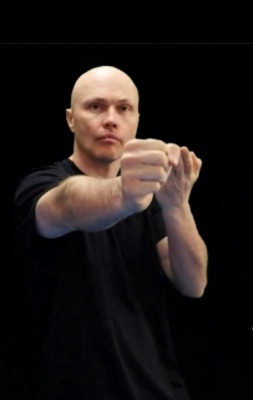
Technical efficiency vs physical power. As you get older you just don't have as much physical power as when you where younger.

Does Self-Defense Have to Get Harder as We Get Older?
Looking for a Smarter Path
Recently, I received a phone call from someone interested in training. He had many years of experience in full-contact karate, and like many experienced martial artists, he wasn't looking for an easier path—he was looking for a smarter one. As he put it, he was getting older, and his body was beginning to remind him of the years of hard training. He wanted to continue improving without continuing to accumulate unnecessary injuries.
That conversation stayed with me because it reflects a question many experienced practitioners eventually begin asking: Can I become more effective without relying on becoming tougher?
The Value of Full-Contact Training
Full-contact training develops many admirable qualities. It builds courage, determination, conditioning, resilience, and the ability to perform under pressure. There is real value in that kind of training, and I have great respect for the people who dedicate themselves to it.
But as the years pass, many practitioners begin to look beyond simply becoming stronger, tougher, or more durable. They start asking whether there is another way to improve—one that allows them to use their experience more intelligently and place less unnecessary stress on the body.
Sharpening the Axe
The way I think about it is this: imagine two people chopping down a tree. One is using a dull axe, while the other has taken the time to sharpen theirs. Both may eventually cut the tree down, but the person with the sharper axe uses less effort, wastes less energy, and accomplishes the same job more efficiently.
Everyone benefits from a sharper axe. But the person who is smaller, older, recovering from injuries, or simply less physically powerful feels the difference immediately. Efficiency matters most when physical resources are limited.
That is how I see Functional Wing Chun.
Building Efficiency
FWC does not reject strength, speed, or power. If you have those qualities, they are advantages. But they are not the foundation of the method.
Instead, we focus on becoming more efficient. We improve our structure and positioning, reduce the opponent's options, and create better opportunities. When contact is made, we learn to clear obstacles using the minimum force necessary so we can continue progressing rather than becoming stuck in unnecessary exchanges.
The goal is not to eliminate physical ability. It is to make better use of whatever physical ability we have.
Avoiding Unnecessary Exchanges
Another important difference is the objective. In many combat sports, athletes become incredibly durable because they are preparing to exchange powerful techniques within a defined ruleset. That toughness is earned through years of disciplined training, and it deserves respect.
FWC starts from a different question. Rather than asking how to exchange more effectively, we ask how to avoid unnecessary exchanges altogether. Rather than relying on greater force to overcome a well-conditioned opponent, we seek better positioning, clearer paths, and access to areas where excessive force simply isn't required.
This changes the way we think about self-defense. We are not trying to prove that we can endure more punishment. We are trying to solve the problem before a prolonged exchange becomes necessary.
A Method That Continues to Develop
The goal is not to fight harder. The goal is to solve the problem more efficiently.
That is why I believe Functional Wing Chun becomes more valuable as we get older—not because we necessarily become weaker, but because we become more aware that efficiency is something we can continue improving for the rest of our lives.
Power is always an advantage. But efficiency allows you to make the best use of whatever power you have.